

The Different Styles of Port Wine:
Port wine is a world unto itself; like other wines, it is divided into reds, whites, and rosés. However, throughout its history, various styles have been created, and their differences are attributed to the time spent in barrels and the size of these barrels. This diversity is highly valued by consumers as it allows people with varied tastes to enjoy the wine. The range is extensive and complex. Let's summarize it as follows:
Whites:
White Ports are crafted, as the name suggests, from white grape varieties typical of the Douro region. Aged in large oak barrels, they come in various styles, always associated with aging periods, different levels of sweetness, and the aging process. Younger Port whites are often enjoyed as an aperitif, while those with a longer aging period have a more intense flavor and are best consumed after meals. The different types of whites include:
- Dry White, White, and Lágrima: These are the only categorized Ports based on sweetness – Dry, Medium-Sweet, and Sweet, respectively. However, they never completely lose their sugar, so it's common to find dry Ports retaining some sweetness. These are young and fruity wines that spend an average of 4 years in oak barrels, developing notes of wood, as well as fruity aromas and flavors.
- White with Age Indication: Indicates the average time the wine has spent in barrels. It is a blend of several wines of the same age, presenting itself as elegant, full-bodied, and rich.
- Colheita White: Wine from a single harvest, from a single year, aging in very large barrels. Over its maturation, it acquires a straw-like color, along with notes of wood, aromas, and flavors of ripe and elegant fruits.
- Reserve White: A very high-quality white Port, obtained through blending and aged in wood for at least seven years. It has golden tones and a persistent flavor.

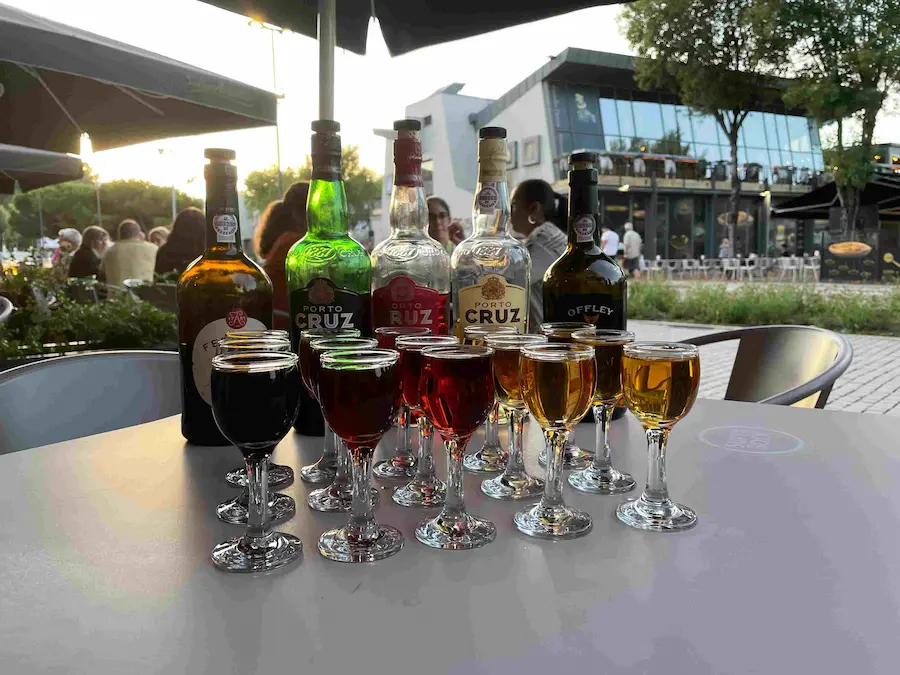
Different brands and types of Port wine.
Ruby:
A wine with a dark color resembling the gemstone, hence its name. It undergoes aging with little or no oxidation, preserving a very fruity taste, with many primary aromas of red fruits. It is the sweetest of the reds and the perfect style for those new to Ports. This wine results from blending several harvests and aging for 2 or 3 years in large oak barrels before bottling. Within the Ruby style, in ascending order of quality, are:
- Reserve Ruby: A young wine, rich in fruity aromas, mainly reminiscent of red fruits, slightly oxidized, full-bodied, and with a strong flavor. The "Reserve" label is given to the younger wines that age between three and six years in barrels.
- LBV (Late Bottled Vintage): High-quality wines from a single harvest, bottled after four to six years in large oak barrels or stainless steel tanks. They have a beautiful ruby red color, red fruit notes that soften over time, and are intense, rich, fruity, and full-bodied. They are ready to drink, but some may continue aging in the bottle.
- Vintage: Considered the king of Ports, derived from the best grapes and embodying the Portuguese saying, "Like Port wine, the older, the better." It comes from a single harvest, aging in wood for about two years, always counting two winters and one summer after the harvest, after which its quality is evaluated. If it passes the test, it is bottled unfiltered and continues aging in the bottle for over 20 years. With age, its initial strength becomes elegant, and fruity notes evolve into floral nuances. They are only produced in the best vintages, and those from a single vintage and estate are called Single Quinta. They need to be decanted before serving to separate the sediment. Overall, it's a wine that is appreciated differently throughout its life. Up to 5 years, it maintains a fruity character and very dark red color, with more exuberant aromas and flavors than a younger wine. After 10 years, a new transformation occurs, and it acquires a garnet color, with aromas and flavors turning into notes of mature fruits. As it continues to age in the bottle, it becomes a smoother wine.
- Crusted: A high-quality Port obtained by blending wines from different harvests and bottled after 3 to 4 years of aging in barrels. Once bottled without filtration, it is named "Crusted" due to its unique characteristics causing sediment (crust) at the bottom of the bottle. These are intense and concentrated wines, with fruity and elegant aromas and flavors. It is also an excellent alternative to Vintage Port. It should be decanted and consumed without too much delay.

Different types of red port wine, ruby & tawny.
Tawny:
Wines produced from blends, typically with an average age of three years, aged in wooden barrels for 5 to 40 years for greater oxidation. With less body and softer colors than Ruby, such as pale brown, Tawny Port is silky and complex. Due to the large size of traditional barrels (550 liters) for aging, there is a high degree of oxidation, resulting in more fruity notes evolving into aromas of dried fruits, spices, and wood. Tawnies do not continue aging in the bottle, so the older the wine, the more these characteristics emerge. Within this category, there are:
- Young Tawny: A wine that spends only three years in the barrel, with a lion-colored red, featuring certain notes of dried fruits and wood aromas.
- Tawny Reserve: A wine that ages an average of 6 to 7 years in the barrel, developing a beautiful amber color with tinges of brown. It has attractive and elegant aromas of matured and superior qualities.
- Tawny with Age Indication: 10, 20, 30, and 40 Years. High-quality wine where the labels indicate the average time spent in the barrel. It is a blend of wines from various vintages to bring together different organoleptic characteristics (color, aroma, and taste). Depending on its age, they acquire increasingly amber tones and intensify and diversify aromas and flavors of dried fruits and wood to select levels. The aging period in wood is variable.
- Colheita: A high-quality wine, smooth, from a single harvest, which ages in wood for at least seven years, although some age up to 30 years, becoming complex and generous. Classified as excellent by the Port Wine Institute, their labels have two seals: "For Sale" and "Bottled" (because their lifespan is relatively short). During aging, the young and fruity aromas oxidize and transform into a bouquet where dried fruits, wood, and spices stand out.
- Vintage: With only one year, these are the kings of this category. They have a minimum aging of 8 years in oak barrels, with it being common to find wines over half a century or even much older. Depending on their age, the color changes from ruby red to light amber. The aromas and flavors explode in the mouth, offering an elegant and rich mix with fantastic notes of dried fruits and wood, resulting in a unique experience based on the product.
Rosé:
It is the most recent innovation in Port wine, and when it was launched, it sparked controversy as many claimed it was not a normal Port wine. However, it quickly gained enthusiasts. It is a wine made from red grapes of traditional Port wine varieties, but its pink tone is achieved through a light color extraction. In other words, it is obtained through a low-intensity maceration of the grapes. After production, it ages in stainless steel tanks to maintain its original freshness and avoid excessive oxidation. It has a beautiful pink color with ruby nuances. Its taste is versatile, very fruity, silky, fresh, smooth, and with a fine texture.
There are still some styles worth highlighting, such as the coveted Aged Tawny, whose aging in oak ranges from ten to forty years, and the so-called Garrafeira, soft and scarce wines that spend a minimum of eight years in glass and seven in wood, reminiscent of Madeira-style wines. On our tour of Vila Nova de Gaia, you can discover more about the Port wine as you will pass by the area of wine cellars. And if you would like to know more about where is produced this wine or even taste it you can book a wine cellar visit with tasting included.

Port wine glass in Porto.